Gillingham Road Bridge opens
Published on 15 April 2026
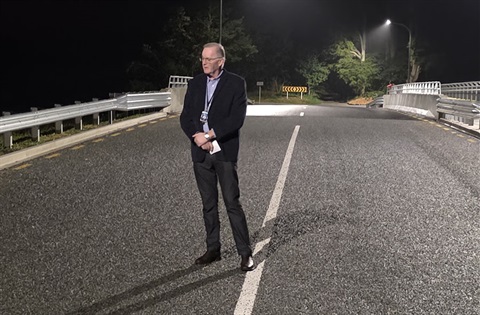
We have completed the replacement of the Gillingham Road Bridge, marking the end of a major $6 million roading improvement project delivered by United Civil Construction.
A dawn blessing and official opening was held on Monday 23 March 2026, when the bridge was opened by Whangārei Mayor Ken Couper.
Whangārei Councillor and Infrastructure Committee Chair Brad Flower was happy to see the new Gillingham Road Bridge open.
"This event highlighted the importance of new infrastructure for our community and future development in the area.
"The 46-year-old timber bridge had long restricted development due to its one-lane width, weight limits and low-speed rating. These limitations affected access and prevented housing development on residential-zoned land north of the Waitaua Stream.
"The new, two-lane concrete bridge replaces the ageing structure and supports planned growth. It includes a shared path for people walking and cycling, and has been raised by 1.5 metres to improve resilience and accommodate future storm flows."
Together with the Springs Flat roundabout project, the upgraded bridge enables surrounding land to be developed for future housing and community growth.
The work was supported by Crown funding through the Infrastructure Acceleration Fund, administered by the National Infrastructure Funding and Financing Agency (NIFF).
Councillor Flower says the NIFF investment has made a lasting difference for our community.
"Replacing this bridge was essential to unlocking the potential of the area. We sincerely thank our residents for their patience during these works, and our contractors for their quality work."
Access to the Waitaua Stream Reserve has now reopened to the public.
The Waitaua Stream and surrounding environment, including significant rākau and associated natural elements, hold cultural importance for Ngāti Kahu o Torongare.
Partnership with the hapū ensured that these taonga were acknowledged, respected and understood within the context of the project, and that tikanga‑based considerations were applied where practicable.