Community voices shape vision for Whangārei’s Knowledge Precinct
Published on 08 October 2025
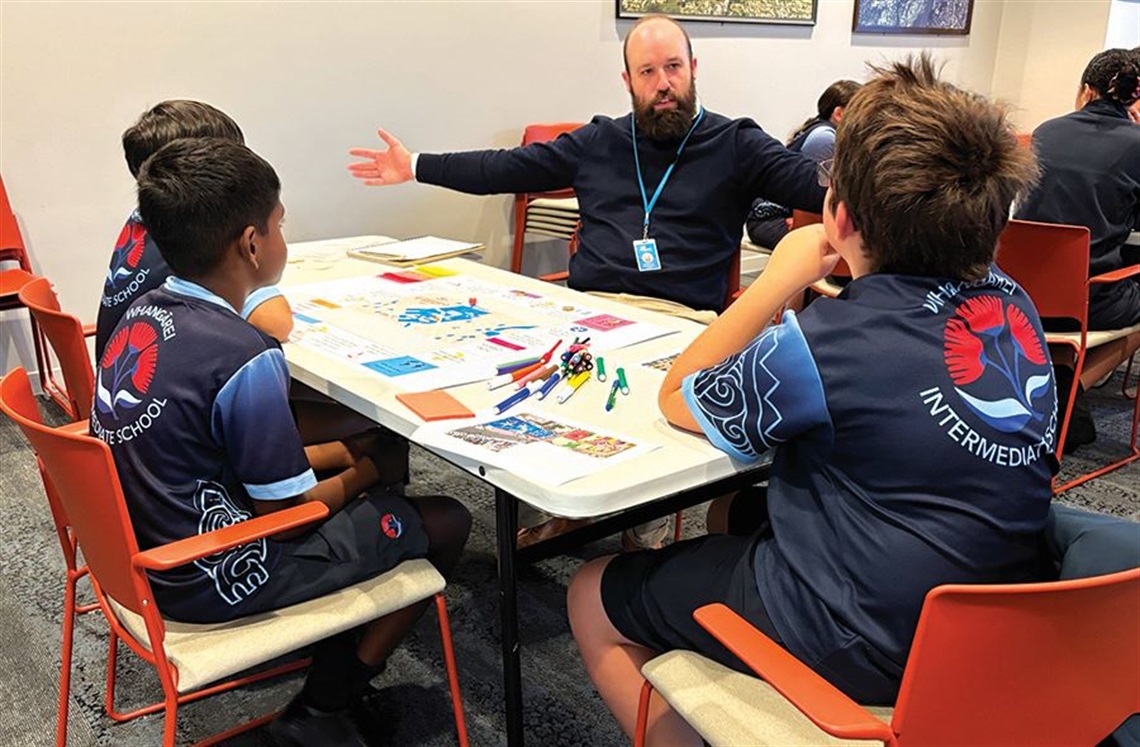
Students from Whangārei Intermediate added their voices to the engagement for the Knowledge Precinct Plan.
Hundreds of Whangārei locals have had their initial say on the future of the city centre, as we begin shaping the draft Knowledge Precinct Plan.
The Knowledge Precinct Plan is a 30-year strategy focused on the area surrounding Te Iwitahi (civic centre), Forum North, Whangārei Central Library, Cafler Park and the Waiarohia Stream. It aims to create a vibrant, inclusive hub for learning, arts, and community life.
In May 2025, Council staff engaged with the public through an online survey and drop-in sessions, receiving 165 survey responses, and more than 90 attendees to the events. Staff also met with hapū, local landowners, businesses, groups, school children and residents in the area.
You can read the full summary of the engagement here:
Knowledge Precinct Plan First Round of Engagement – Summary Report(PDF, 1MB)
Strategy and Democracy General Manager Aaron Taikato says the response was encouraging. “We’re really grateful to everyone who took the time to share their thoughts. This is a collaborative process, and understanding the community’s needs, aspirations and concerns is vital to getting this right.”
He says the feedback showed strong support for key ideas in the plan. Sixty-four percent of respondents supported or strongly supported the creation of a tertiary education hub in the city centre. Many saw it as a way to revitalise the area, retain local talent, and offer more opportunities for young people.
“People want to see Whangārei become a place where you can study, work, and thrive without having to leave,” he says. “A tertiary hub could be a real gamechanger.”
Support was also strong for a new, larger performing arts theatre, with 72% of respondents in favour. The community expressed a desire to attract a broader range of performances and events, and to create a cultural asset that would benefit future generations.
However, the feedback also highlighted concerns, particularly around cost, parking and infrastructure.
“We heard clearly that people are excited about the possibilities, but they also want to know how it will be paid for and how we’ll manage things like transport and access. Those are valid concerns, and Council is committed to working through them before any decisions are made.”
Safety, transport and inclusivity were recurring themes. Respondents called for more spaces and activities for young people and children, better pedestrian and cycling connections, and adaptable community spaces that are safe and welcoming for all.
The community also recognised the existing strengths of the area, including the Whangārei Central Library, Cafler Park, Lovers Lane and the Old Library building. Many saw opportunities to build on these assets to create a more connected and thriving city centre.
Council staff are now developing a draft Knowledge Precinct Plan that incorporates the feedback received. This draft will be shared with the public in a second round of engagement in early 2026.
“This is just the beginning,” says Mr Taikato. “We’re taking the time to listen, reflect and plan carefully. The community will continue to play a central role in shaping what the Knowledge Precinct becomes alongside potential partners including key tertiary providers.”